
Dallas County Criminal Court Case Files
A criminal court record begins when a criminal case is opened in court. In Dallas County, the Circuit Court and Associate Circuit Division handle criminal matters within Missouri's 30th Judicial Circuit. Felony cases, misdemeanor cases, preliminary criminal matters, probation violations, bond orders, and sentencing entries can all produce docket activity. The Circuit Clerk is the local record office for court copies and certified criminal case documents.
The arrest side and the court side should not be mixed. The Sheriff's Office may have booking, custody, incident, or roster information, while the court record shows the filed charge, plea, hearing events, disposition, and sentence. The page for Dallas County arrest records and court charges focuses on the arrest-to-charge pathway; criminal court records focus on the full case file and outcome.
Search Dallas County Criminal Court Records
Use Missouri Case.net for public Dallas County criminal court records. Search by case number when a summons, bond paper, attorney letter, or court notice provides it. Search by defendant name when the number is unknown. Narrow by Dallas County, the 30th Judicial Circuit, criminal case type, filing date, or scheduled hearing date when those options appear.
- Open Case.net and choose litigant name or case number search.
- Enter the defendant name or full Missouri case number.
- Select Dallas County or the 30th Judicial Circuit if the portal offers a county or court filter.
- Open the matching criminal case and read the header, charge list, docket entries, hearings, disposition, sentence, and financial entries.
- Request certified copies, older files, or nonpublic-status answers from the Dallas County Circuit Clerk.
The Missouri Department of Corrections is not a court-record database. It can help find people sentenced to or supervised by DOC, but it does not replace the Dallas County criminal court file. Criminal-history repository searches are also separate from court records and may have payment, authorization, or fingerprint rules outside the researched court-record path.
The Missouri Department of Corrections source connects to the custody and supervision stage after sentencing.
That distinction helps separate a Dallas County criminal case file from a later state custody or supervision record.
Dallas County Criminal Case Flow
A criminal court record changes as the case moves through court. Early entries may show the charging document, warrant or summons, bond, and first appearance. Later entries may show arraignment, motions, continuances, plea negotiations, trial settings, verdict, dismissal, sentencing, probation, restitution, fines, costs, or appeal activity. Each count can move differently, so read the disposition for each charge rather than assuming one outcome for the whole case.
Case flow: Charges Filed › Arraignment › Pretrial and Motions › Plea or Trial › Disposition › Sentencing
| Stage | What Happens in the Record |
|---|---|
| Charges filed | The prosecutor files a complaint, information, or other charging document, and the court opens the criminal case. |
| Arraignment | The defendant is advised of the charge and enters a plea or receives the next setting. |
| Pretrial and motions | The docket may show bond review, discovery, motions, continuances, hearings, or warrant and capias activity. |
| Plea or trial | The case resolves by plea, dismissal, bench trial, jury trial, or other court-approved result. |
| Disposition and sentencing | The record shows the outcome and any jail, prison, probation, fines, costs, restitution, SIS, or SES terms. |
What Dallas County Criminal Records Show
Criminal court records are field based. A case can include public party data, the State of Missouri caption, prosecutor and defense information, offense dates, charge descriptions, statute or ordinance references, plea history, docket entries, hearing dates, bond terms, judgment, sentence, and financial obligations. Case.net may expose public docket and document data, while redacted or confidential material is withheld.
| Field | What It Shows |
|---|---|
| Case number | The Missouri case number assigned to the Dallas County criminal case. |
| Defendant | The person charged, with public identifiers limited by court redaction rules. |
| Charges | Offense description, count number, statute or ordinance, class or level, offense date, and current status when public. |
| Bond and warrants | Bond orders, capias or warrant activity where public, and court action after failure to appear or noncompliance. |
| Plea and disposition | Guilty, not guilty, dismissed, acquitted, amended, reduced, SIS, SES, or other outcome terms as entered. |
| Sentence and costs | Jail, prison, probation, restitution, fines, court costs, payment status, or balances when public. |
Dallas County Charges vs Convictions
A charge is an accusation filed in court. A conviction is an outcome after a guilty plea, verdict, or other qualifying finding. Dallas County criminal court records may show charges that were amended, reduced, dismissed, dropped, or resolved differently by count. That is why the charge list must be read with the docket and disposition fields.
| Point | Charge | Conviction |
|---|---|---|
| Stage | Filed accusation at the start or during the case. | Final or qualifying result after plea, trial, or court finding. |
| Proof level | Based on probable cause or charging decision. | Requires guilty plea, verdict, or accepted legal outcome. |
| Record risk | May remain visible even if later dismissed unless sealed or expunged. | May affect sentence, probation, custody, driver records, or future legal status. |
| How to verify | Read the charge row and docket activity. | Read the disposition, judgment, and sentence entry for each count. |
Prosecutor and Public Defender Path
Missouri uses the term Prosecuting Attorney. The Missouri Association of Prosecuting Attorneys directory lists Dallas County Prosecuting Attorney Jonathan Barker, P.O. Box 19, Buffalo, MO 65622, phone 417-345-5644, and fax 417-345-5561. The prosecutor files and handles state criminal charges, works with law enforcement on charging decisions, and represents Missouri in criminal proceedings, probation-violation matters, and some criminal traffic cases.
The manifest image source for the Missouri prosecutor directory supports the Dallas County prosecutor contact path.
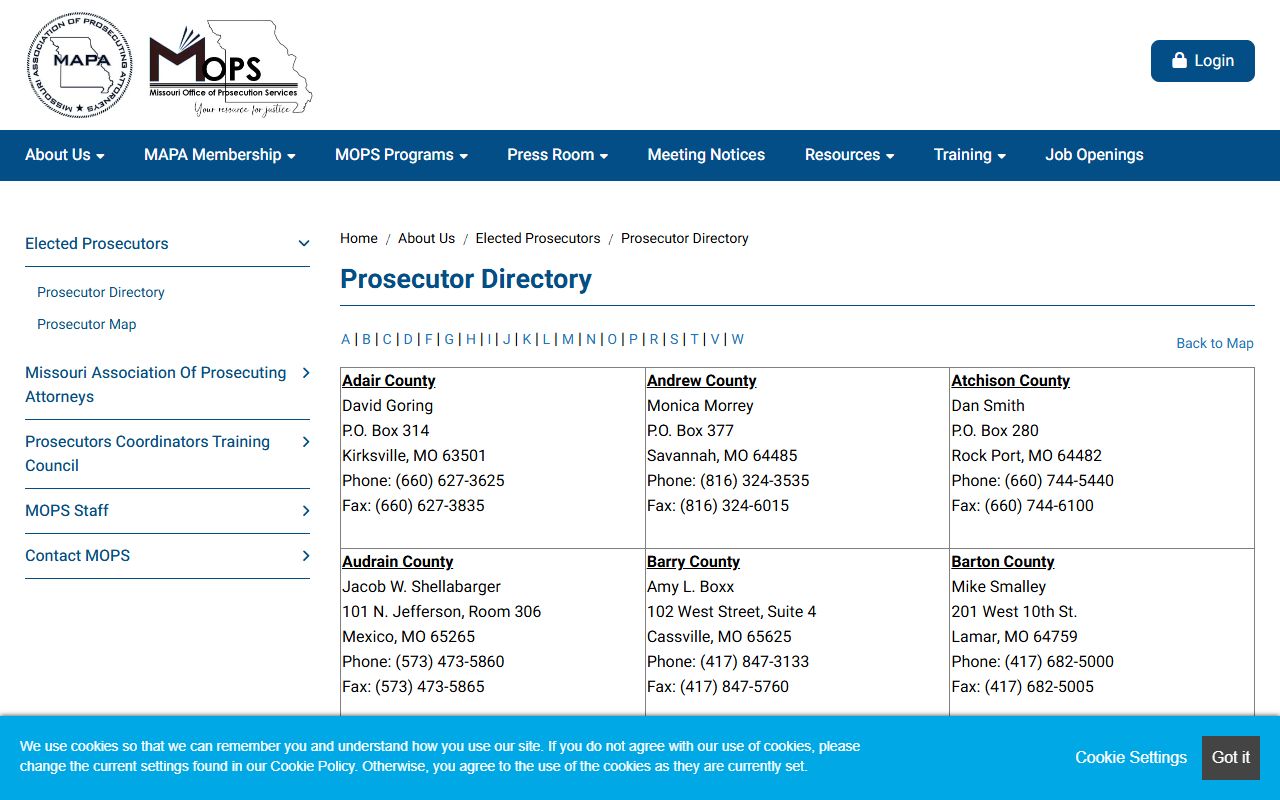
Use that directory for prosecutor-office contact details, not for defense advice or case-copy requests.
Indigent defense is handled through the Missouri State Public Defender System. MSPD provides representation to eligible people accused of or convicted of crimes at state trial, appellate, Missouri Supreme Court, and U.S. Supreme Court levels. The official MSPD office locator is the safer route for finding the office assigned to the county of charge.
The MSPD application source in the manifest points to the public defender path for defendants and families.
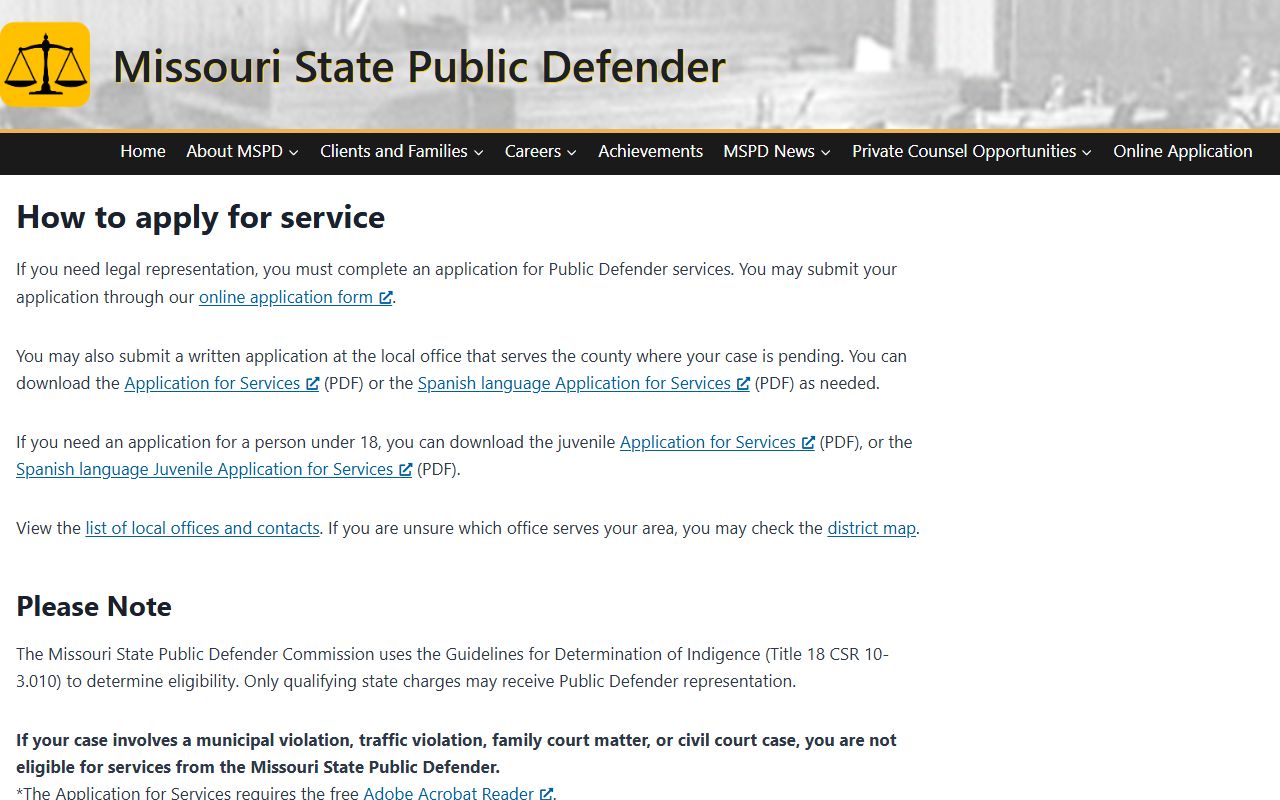
That process is about representation eligibility and application steps, not public access to the criminal court file itself.
Sealed vs Expunged Criminal Records
Sealed and expunged records are not the same. A sealed criminal court record is closed from ordinary public view by court order or law, but some agencies may still have limited access. Expungement under RSMo 610.140 is a statutory process that can close qualifying Missouri arrests, pleas, trials, convictions, violations, or infractions after the court grants relief.
| Point | Sealed | Expunged |
|---|---|---|
| Public visibility | Closed from ordinary public access. | Closed under an expungement order for qualifying records. |
| Source | Court order, statute, rule, or confidential case type. | Petition and court review under Missouri expungement law. |
| Agency access | Some law enforcement, court, licensing, or statutory users may still see limited records. | Some agencies may retain or access records as allowed by statute. |
| Dallas County step | Ask the Circuit Clerk how a sealed record may be requested or whether a motion is required. | File in the court where the charge, plea, trial, or conviction occurred if eligible. |
Public Access to Dallas County Criminal Records
Public criminal court records are generally searchable through Case.net when they are not sealed, juvenile, expunged, or otherwise restricted. Missouri's public-record policy appears in RSMo 610.011, while arrest and incident records have their own limits in RSMo 610.100. Court records also follow Missouri court rules that govern judicial-record access and redaction.
Note: Juvenile, adoption, sealed, expunged, confidential victim, and protected personal data do not become public because a criminal case exists.
For a certified criminal docket sheet, certified judgment, or sentencing copy, contact the Dallas County Circuit Clerk at 417-345-2243. For jail custody status, use the Sheriff's Office or current-inmates route rather than the court file. For sentenced state custody or supervision, use DOC. For statewide criminal-history products, follow the state repository rules rather than relying on a court docket alone.
The second Missouri State Public Defender source in the manifest points to the system homepage, a statewide legal-service source connected to criminal case defense.
Criminal records users should separate defense-service resources from public-record search resources because they answer different needs.
Restricted Dallas County Criminal Information
Not every criminal-related item belongs in the public court record. Juvenile delinquency and abuse or neglect records are confidential except as allowed by law or court order. Personal identifiers, protected victim data, full financial account numbers, confidential addresses, mental-health information, sealed material, and expunged records are also restricted or redacted. Active investigative material may be closed even when an arrest or charge is public.
Victims and witnesses should use official contacts for safety and case-status concerns. The Sheriff's resources list a DCSO Victim Advocate, Ashley McCowan, at 417-770-4947. Defendants should use counsel, the court, or MSPD as appropriate. The Circuit Clerk can explain filing, copy, certification, and docket-access procedures, but court staff cannot give legal advice.