
Dallas County Marriage Records
Marriage records in Dallas County are handled by the Recorder of Deeds, not by the Circuit Clerk. The Dallas County Recorder iRecord portal identifies the office as "Dallas County, Missouri Recorder of Deeds - Online," names Kami Miller as Recorder of Deeds, and lists phone 417-345-2242. The Missouri Association of Counties mailing address for the recorder is P.O. Box 406, Buffalo, MO 65622-0406. Older directory entries may show a prior recorder name, so the iRecord listing and phone line are the better current verification points.
Use the recorder route for marriage-license questions, certified marriage copies after the license has been returned and recorded, and online recorded-document access. Use the Circuit Clerk route only when the issue is a divorce case, annulment, legal separation, custody filing, or another domestic-relations court case.
The access channel also changes by purpose. A person trying to prove a marriage for a name change, benefits file, passport issue, or family record usually needs a certified recorder copy, not a Case.net printout. A person researching whether a divorce case was filed should not search iRecord first because divorce is not a recorder document. If the question is historical or genealogical, the Missouri Secretary of State county-records database may also be useful because the research notes that historical marriage collections can be searched by county and record type.
The Dallas County Recorder iRecord portal is the local online recorder path named in the research. The screenshot below is tied to the recorder access point, not to a court-case database.
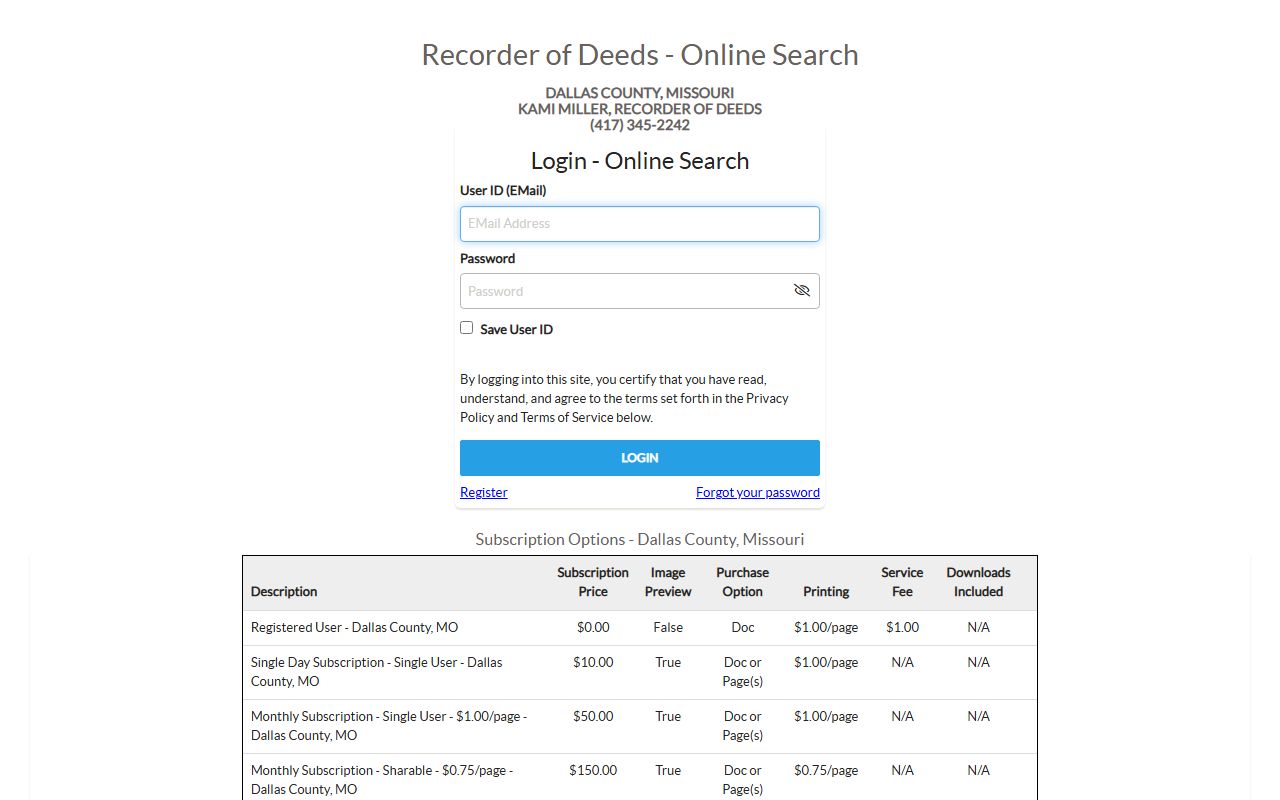
That distinction matters because an iRecord login can help with recorder documents while a divorce decree still has to be searched through Case.net or requested from the Circuit Clerk.
Marriage License Steps
Dallas County did not publish a local marriage-license instruction page in the research materials, so the verified local action is to call the Recorder of Deeds before visiting. Missouri-level recorder practice fills the general framework: both parties generally apply with identification, the license is used in Missouri, and the signed license is returned to the recorder after the ceremony. Local payment types, appointment rules, daily cutoff times, and the total county fee should be confirmed with Dallas County before travel.
Because no Dallas County official page was found for accepted identification, parental-consent handling, interpreter needs, appointment scheduling, or same-day cutoff rules, those details should not be assumed from another county. The strongest local instruction is to call the recorder before applying. Ask whether both applicants must appear together, which identification is accepted, whether cash or card is required, and when a certified copy can be ordered after the officiant returns the license.
- Call the Dallas County Recorder at 417-345-2242 to confirm current fee, identification, payment, and application timing.
- Apply with the required identifying information for both parties.
- Use the Missouri marriage license within the state validity period and only for a ceremony in Missouri.
- Have the officiant complete and return the signed license to the recorder.
- Request a certified copy from the Recorder of Deeds after the record is returned and recorded.
Dallas County iRecord Fields
The recorder portal is a login and subscription system. It is useful for understanding the access path even when a user ultimately needs to call the recorder for a certified copy or license application question.
| Field Label | Type | Required | Notes |
|---|---|---|---|
| User ID (EMail) | Text/email | Yes for login | Email address used as the account user ID. |
| Password | Password | Yes for login | Account password for document access. |
| Save User ID | Checkbox | No | Saves the user ID on the device. |
| Register | Link/button | No | Creates a new account before using paid or free options. |
| Forgot your password | Link | No | Password recovery path. |
| Subscription | Option table | Yes for paid access | Registered user, single-day subscription, or monthly subscription. |
Dallas County Marriage Fees
Research found iRecord fees and Missouri statutory add-on fees, but it did not locate a Dallas County page stating the full local marriage-license price or the total certified-copy price. The amounts below should be read exactly that way: verified add-ons and portal charges, with the missing county totals preserved rather than guessed.
| Item | Amount | Source / Note |
|---|---|---|
| iRecord registered user | $0.00 | Dallas County iRecord landing page. |
| iRecord single-day subscription | $10.00 | Dallas County iRecord landing page. |
| iRecord monthly subscription | $50.00 | Dallas County iRecord landing page. |
| iRecord document/page printing | $1.00/page | Dallas County iRecord landing page. |
| Marriage-license additional statutory fee | $20.00 added by statute | RSMo 451.151; Dallas County base fee not located. |
| Certified marriage copy additional statutory fee | $7.00 added by statute | RSMo 451.151; Dallas County total copy fee not located. |
The Missouri marriage-license fee statute is one source used for the table. It supports the statutory add-on amounts but does not provide the full Dallas County counter charge.
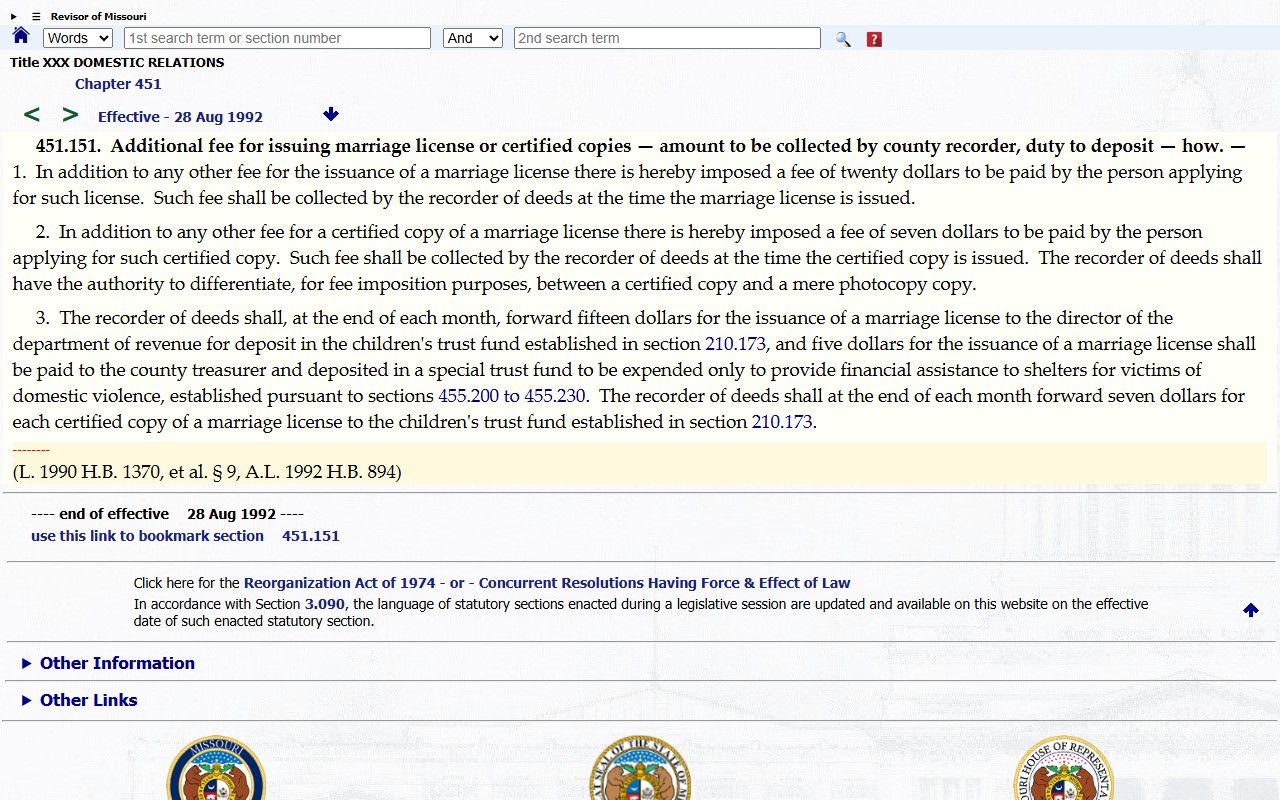
For a same-day errand, confirm the total due and accepted payment directly with the recorder before applying or ordering copies.
Missouri DHSS Statements
Missouri DHSS provides state vital-record services for certain marriage and divorce statements. The state route is helpful when a person needs a vital-record statement, but it is not the same as the county recorder's full marriage record or the Circuit Clerk's divorce decree. For marriage, the county where the license was issued remains the main record holder. For divorce, the court that granted the judgment remains the source for the decree and full case file.
That distinction prevents the most common wrong-office request. DHSS can confirm limited vital-record facts through its state process, while the county office can provide the local document used in many official transactions. If an agency asks for a "certified decree," use the Circuit Clerk. If it asks for a certified marriage copy from the issuing county, use the Recorder of Deeds. If it asks for a state vital-record statement, use DHSS.
The Missouri DHSS vital records page explains the state-level vital-record path for marriage and divorce statements.
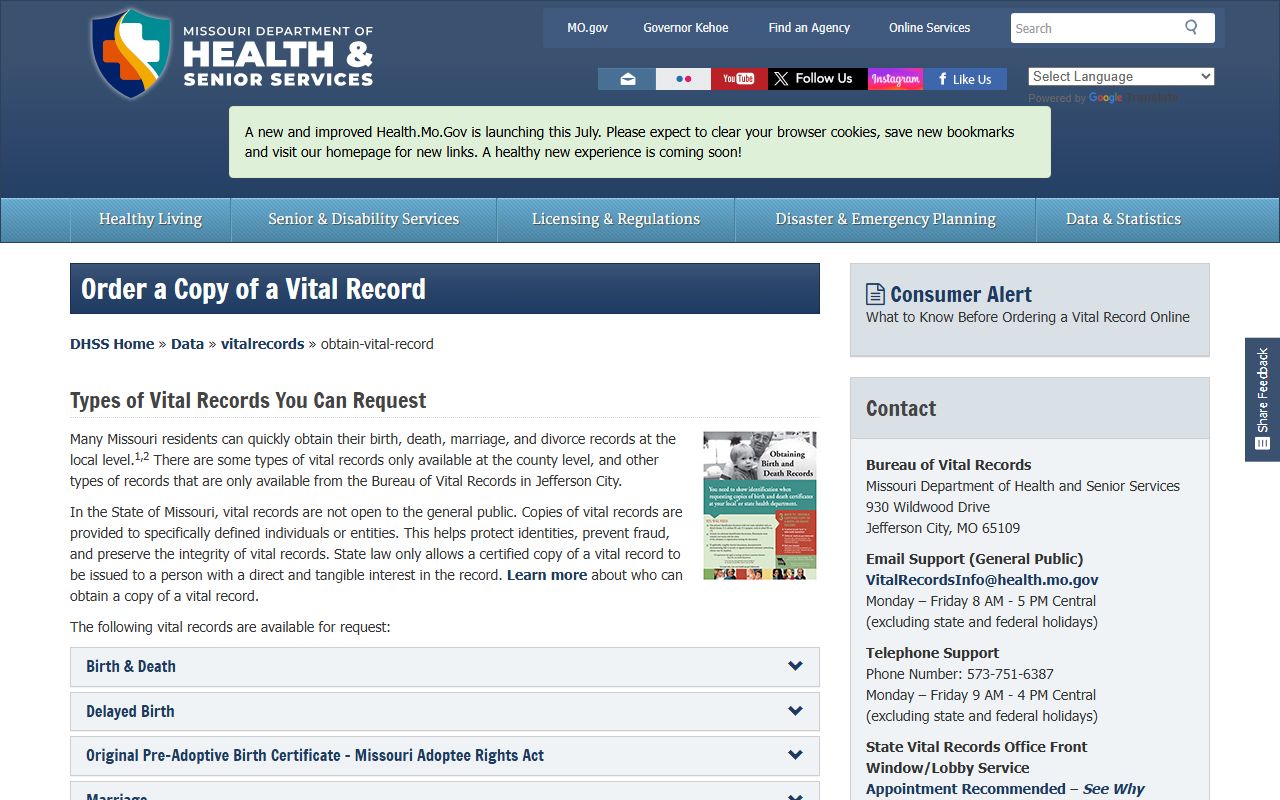
Use DHSS when the needed document is a state vital-record statement; use Dallas County offices when the needed document is the recorded marriage copy or certified court decree.
Dallas County Divorce Records
Divorce records are court records. A divorce decree or dissolution case file is handled by the Dallas County Circuit Clerk because divorce is a Circuit Court matter. Search public docket information through Missouri Case.net, then contact the Circuit Clerk for certified decrees, older files, documents not remotely available, or any case that appears restricted. The Circuit Clerk phone in the research is 417-345-2243.
Missouri divorce law in the research gives two key filing facts. RSMo 452.305 requires one party to have been a Missouri resident, or stationed in Missouri, for 90 days before filing. It also requires at least 30 days after filing before judgment. RSMo 452.310 says a dissolution petition alleges that the marriage is irretrievably broken. Those statutes explain the court process, but the decree copy still comes from the Circuit Clerk.
Case.net can help locate the case number, filing date, caption, docket entries, hearing settings, and judgment entries that are public. It should not be treated as a complete family-file download. Domestic cases often include financial, custody, child-support, and minor-child information that may be redacted, limited, or unavailable remotely. When the docket shows the case but the exact decree is not visible, the clerk route is the right next step.
The Missouri dissolution residency and waiting-period statute is one of the state sources supporting Dallas County divorce procedure.
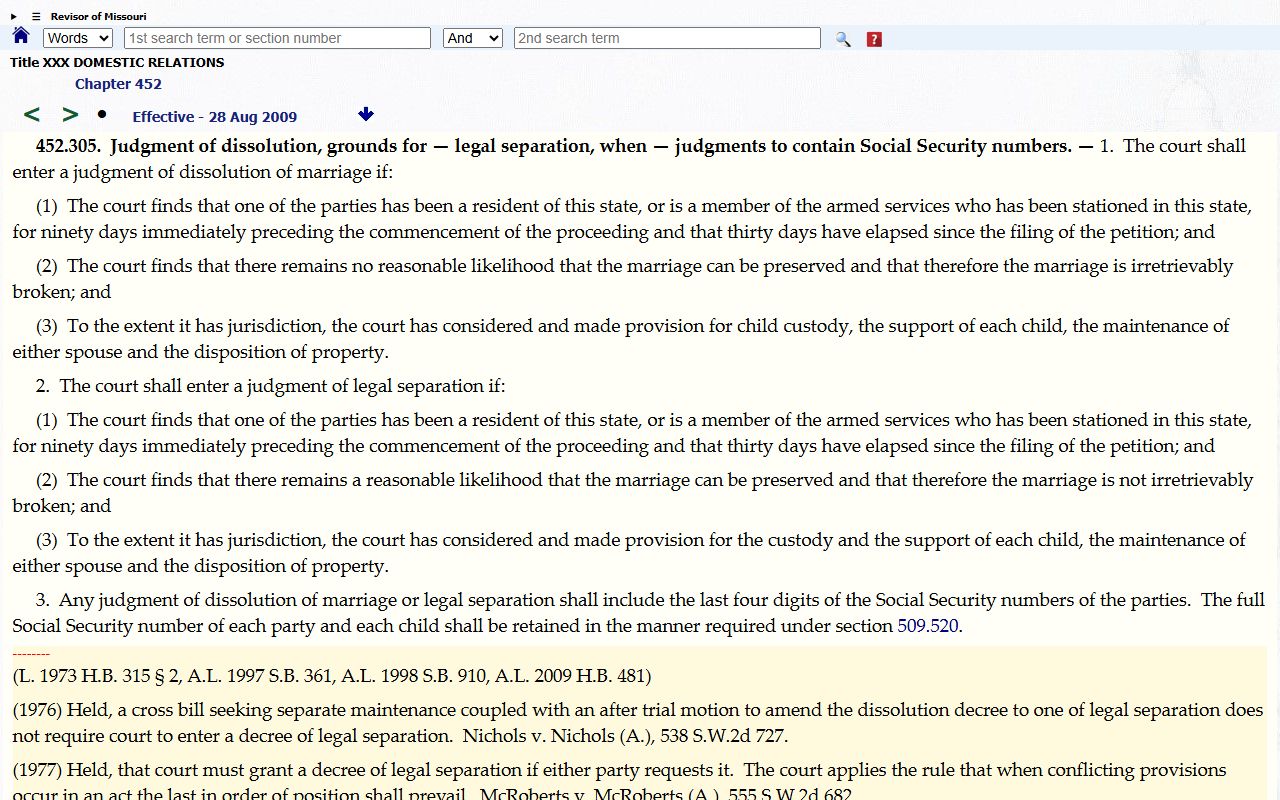
Family files can contain public docket entries and decrees while still redacting or restricting Social Security numbers, minor information, financial-account data, custody details, and protected information.
Dissolution Form Inventory
The DHSS Certificate of Dissolution is a reporting form, not a public search portal and not a substitute for a certified decree. Research identified these fields in the form inventory:
- Case number and state file number.
- First party name, last name before first marriage, Social Security number, residence city, state, zip, county, date of birth, and birthplace.
- Second party identifying fields using the same categories.
- Place of marriage, date of marriage, number of children, petitioner, county or circuit court, and date decree granted.
- Attorney or certifier information plus clerk and court certification fields.
Because the form includes restricted personal data, it should not be treated like a public docket sheet. For a Dallas County divorce records search, Case.net and the Circuit Clerk remain the practical public-record route.
The form inventory is still useful because it shows why a state dissolution certificate can confirm core vital facts without replacing the court record. It contains party identity fields, marriage location, decree date, and court certification fields, while the court file may contain pleadings, motions, orders, settlement terms, custody provisions, and the signed judgment. A requester should decide which record is needed before paying fees or mailing a request.
Divorce Record Steps
- Confirm Missouri residency requirements before filing or interpreting a recently filed case.
- Search Case.net by party name or case number for public Dallas County domestic-relations docket information.
- Check whether the needed item is a docket entry, decree, judgment, or a state vital-record statement.
- Request decree copies and certified court documents from the Dallas County Circuit Clerk.
- Use DHSS only for the limited vital-record statement route, not for the full court file.